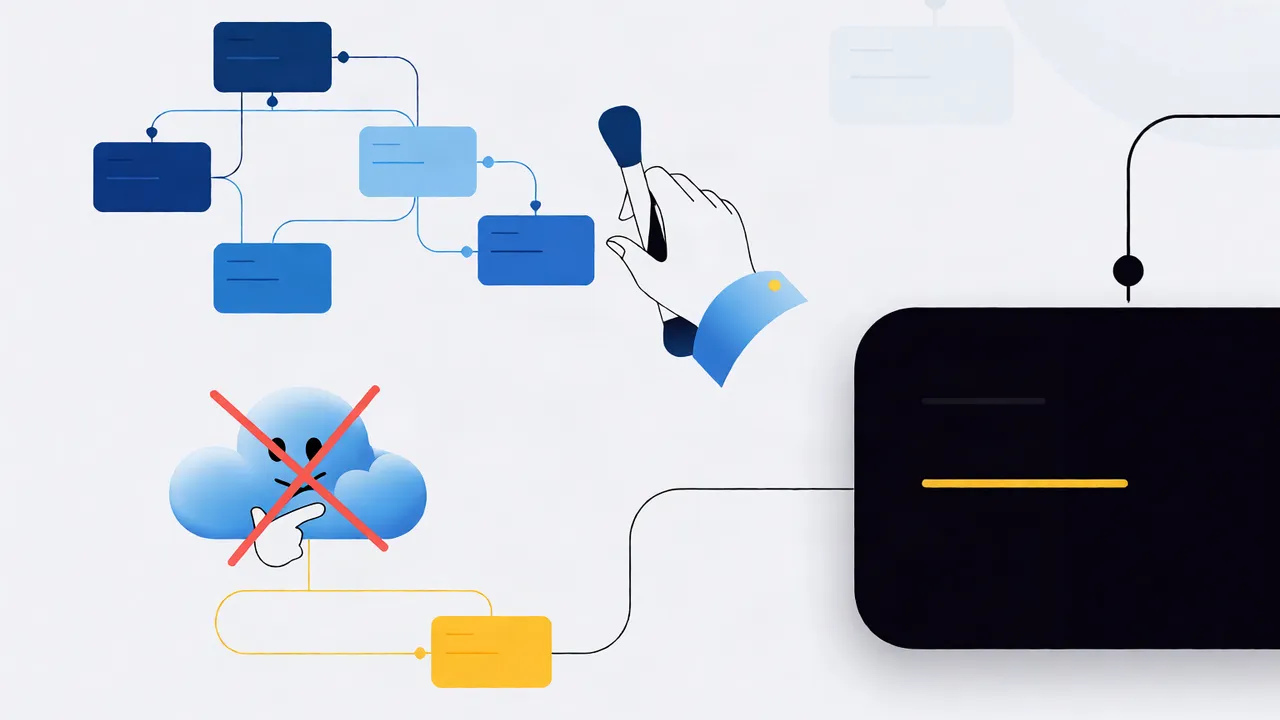
If you are shipping an AI agent in 2026, choose a framework that compiles your agent graph once and replays it deterministically, with zero LLM calls on replay. I would reach for LangGraph when the workflow needs branching and state, and CrewAI when the work splits into role-based crews. I would avoid any framework that re-plans with an LLM on every step—that is where latency and cost explode.
Instaclustr’s 2026 survey of agentic AI frameworks covers eight options, and the LangChain ecosystem page groups LangGraph, CrewAI, and Google ADK under its agent framework umbrella. Instaclustr’s agentic AI frameworks roundup LangChain’s agent framework page
Key takeaways
- A framework should reduce boilerplate, not hide the control flow.
- Deterministic replay means the same input produces the same trace every time.
- Human-in-the-loop and user authorization belong in the framework, not bolted on later.
- Open source frameworks give you the code; managed frameworks give you integration.
What are AI agent frameworks and why do they matter in 2026?
An AI agent framework is a library that lets you define agents, tools, and the control flow between them, then execute that graph reliably. In 2026, the difference between a demo and a production agent is usually observability and replay, not the model you use. Frameworks matter because they standardize how an agent calls a tool, handles a failure, and hands off to a human. Without one, every new agent is a custom pile of prompts and try/catch blocks.
What are the best AI agent frameworks in 2026?
 I would start with LangGraph, CrewAI, or Google ADK. LangGraph is built on LangChain and treats agents as cyclic graphs with persistent state, which fits long-running workflows. CrewAI organizes work around roles and crews, which maps well to support, research, and writing pipelines. Google ADK is Google’s managed kit, strongest if you are already in the Vertex AI ecosystem. The table below compares them on the attributes I check before committing to one.
| Framework | License | Best for | Replay model | Human-in-the-loop | Notes |
|---|---|---|---|---|---|
| LangGraph | Open source | Stateful, branching workflows | Compile once, replay deterministically | Built-in breakpoints | Requires LangChain concepts |
| CrewAI | Open source | Role-based multi-agent crews | Sequential or hierarchical | Process-level approvals | Good for content and research |
| Google ADK | Proprietary / Managed | Google Cloud and Vertex AI shops | Platform-managed | Console-based approvals | Vendor lock-in risk |
| Custom code | Your own | Simple, single-tool agents | Whatever you build | Whatever you build | High maintenance |
What are the best LangChain alternatives in 2026?
 If you want to move beyond LangChain, CrewAI is the most direct alternative for multi-agent work because it replaces LangChain’s chain abstraction with a role-and-task model. Google ADK is the alternative if you want a vendor-managed control plane. I have also seen teams use plain Python with an MCP client when they only need one agent and one browser tool. The point is that LangChain is no longer the default; it is one option among several.
How do I compare AI agent frameworks?
I compare them on four questions: Can I replay a failed run without paying for another LLM generation? Can I pause the agent and let a human approve the next action? Does it integrate with my existing tools through MCP or a standard function-calling interface? Who owns the state when the agent crashes? If a framework fails any of these, it is a prototyping tool, not a production platform.
What are the AI agent framework selection criteria for production?
Use this checklist before you commit:
- Deterministic replay: same input, same trace, no surprise LLM calls.
- State persistence: checkpoints survive restarts and crashes.
- Human-in-the-loop: breakpoints for approvals, edits, and overrides.
- Tool connectivity: MCP or OpenAPI support for browsers, databases, and APIs.
- Observability: traces, token usage, and error rates per agent run.
- Exit path: you can export the graph and run it elsewhere.
If you cannot check all six, keep the project in staging.
What does production AI agents architecture look like?
Production architecture separates the planner from the executor. The framework owns the graph; a worker pool runs the nodes; a durable log stores every tool call and result. Browser automation is usually a separate service because real browsers are heavy and stateful. I described this pattern in detail in Mastering AI Agent Orchestration: Architecting Multi-Agent Workflows in 2026. The key rule is: do not run a full browser inside the agent loop unless you have to.
Which multi-agent orchestration frameworks should I use?
For multi-agent work, LangGraph and CrewAI are the two I reach for. LangGraph handles cyclic message passing between agents, which you need when agents critique each other. CrewAI handles sequential handoffs, which you need when one agent writes and another reviews. If you need many agents running at once, you need a queue and a worker pool, not just a framework. Architecting for Scale: Concurrent AI Agent Workflows in Browser Environments covers the concurrency layer.
What AI agent development tools do I need?
You need a tracer, a replay tool, and a debugger. The framework should emit traces you can inspect after a run. You need to be able to replay a failing agent step and see exactly what the model saw. I use Debugging AI Agents in Browser Environments: A Developer's Playbook as the reference for this. Without replay, you are guessing why an agent clicked the wrong button.
Which open source AI agent frameworks are production-ready?
LangGraph and CrewAI are the open source options I trust in production. Both let you read the source, pin the version, and host the control plane yourself. Google ADK is open in some parts but managed in others, so check the license before you build around it. Avoid any framework that requires you to send your agent graph to a SaaS just to execute it.
How do I integrate browser automation and external tools?
Browser automation belongs behind a tool interface, not inside the agent’s reasoning loop. I use MCP to expose browser actions—click, type, navigate—as tools the agent can call. For logged-in sites, the user must authorize the session first; the agent never holds credentials. Top Browser Automation Tools for AI Agents: A 2026 Comparison breaks down headless versus real browsers. Implementing Human-in-the-Loop for AI Browser Agents: A Developer's Guide to User Authorization and Control covers the authorization flow.
Should I build custom or use a framework?
Build custom only when your agent does one thing, calls one tool, and never needs to resume after a crash. Use a framework when you have branching logic, multiple agents, or compliance requirements. The hidden cost of custom is that you end up rebuilding a framework badly after six months of patches. I have made that mistake; do not repeat it.
How do I ensure reliability and observability in production AI agents?
Reliability comes from retries with backoff, circuit breakers, and deterministic replay. Observability means tracing every LLM call, tool call, and state transition. If you cannot see what happened in the last run, you cannot fix the next one.
How do I future-proof my AI agent stack?
Future-proofing means keeping the agent graph separate from the model provider. If you compile once and replay deterministically, swapping models is a configuration change, not a rewrite. Keep your tools behind MCP so you can add a new browser or database without touching the agent logic. The framework should be replaceable; your business logic should not be.
If you want to see deterministic replay in a real browser, try Twin Browser. We compile agent sessions once and replay them with zero LLM calls, so your cost stays flat as you scale.
FAQ
Is LangChain still the best AI agent framework in 2026?
No. LangChain is still useful, but LangGraph and CrewAI have surpassed it for production agent orchestration because they treat agents as graphs and crews rather than linear chains.
Is CrewAI better than LangGraph for multi-agent workflows?
I choose LangGraph when agents need to critique each other in cycles; I choose CrewAI when they hand off work sequentially. Match the framework to the shape of the work.
Do I need a framework at all, or should I build custom?
Use a framework unless your agent is a single script that calls one tool and never resumes. Custom code usually becomes an unmaintained framework after six months.
How do I add human-in-the-loop to an AI agent?
Add breakpoints before state-changing actions, require explicit approval for writes, and log every intervention. The framework should expose these hooks natively.
What is the cheapest way to run AI agents in production?
The cheapest run is the one you do not repeat. Deterministic replay and caching mean you pay for the LLM generation once, then replay the trace without another model call.
Topics
AI agent frameworks 2026 · best AI agent frameworks · LangChain alternatives 2026 · production AI agents architecture · multi-agent orchestration frameworks · AI agent framework comparison · AI agent development tools · open source AI agent frameworks