Short answer: If your agent operates a browser, LLM observability alone is not enough. As of November 2026, the most recent public comparison I can cite was published 21 June 2026 and names five observability platforms; none of the sources I reviewed describe browser-native deterministic replay. You need observability plus replay, or you are replaying failures in your head instead of in a tool.
Key takeaways
- Agent observability spans the full run—browser actions, tool calls, and LLM spans—not just the model.
- As of November 2026, Braintrust positions itself as evaluation-first; Agenta is open-source and self-hostable; Fiddler targets regulated enterprises.
- Deterministic replay lets you replay a failed browser session without re-invoking the LLM, which cuts cost and removes guesswork.
- Vendor pricing and data-retention limits are largely not published in the sources reviewed, so ask before you commit.
Why does traditional LLM observability fall short for AI agents?
Traditional LLM observability watches the model: prompts, tokens, and completions. An AI agent is a loop that acts in a browser, reads the DOM, clicks, and waits. If you only see the LLM spans, you miss the actions between them. That blind spot is exactly where production agent failures hide.
LLM tools were built for chat and completion APIs. They assume a stateless request-response pattern. A browser agent is stateful. It holds cookies, login sessions, and page state across steps. A trace that ends at the last LLM call cannot tell you why a click failed on step four or why a selector broke after a page redirect.
This matters for authorization, too. If your agent logs into a site on behalf of a user, you need to know who authorized that session and when. Observability that starts and ends at the LLM cannot answer that. I cover the mechanism in Implementing Deterministic Replay for AI Browser Agents: A Practical Guide, where the approach is compile once, replay deterministically, zero LLM calls on replay.
What should I look for in an AI agent observability tool?
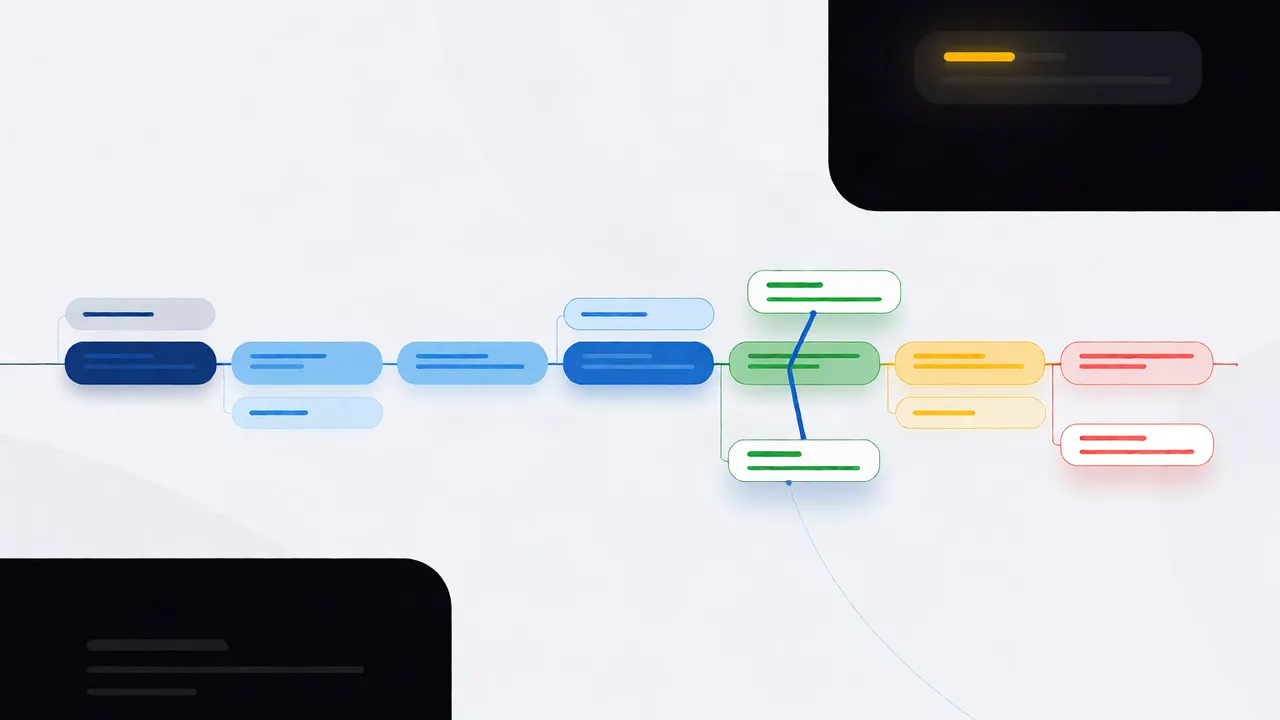
Look for four things. First, full trace capture across the agent loop, not just LLM calls. Second, evaluation and scoring that runs on traces, including LLM-as-a-judge and code-based checks. Third, session replay for browser workflows—DOM snapshots, network requests, and console logs—so you can see what the agent saw. Fourth, alerting and human-in-the-loop controls for high-risk actions like purchases or data exports.
Use this checklist before you evaluate a vendor:
- Does it trace browser actions and tool calls, or only LLM spans?
- Can it replay a session without re-running the agent?
- Does it support automated scoring on historical traces?
- Can a human approve or block sensitive actions before they execute?
- What are the data retention and pricing terms?
I connect this to browser-specific concerns in Optimizing AI Agent Performance: A Deep Dive into Browser Environment Factors.
Which AI agent tracing platforms and monitoring tools should I compare?

As of November 2026, the sources I reviewed name five platforms worth comparing. Braintrust is evaluation-first with automated scoring. Agenta is open-source and self-hostable. Fiddler serves regulated enterprises. Comet Opik adds cost intelligence. Confident AI adds governance controls.
Here is how they compare across the dimensions that matter for browser-based agent workflows.
| Dimension | Braintrust | Agenta | Fiddler | Comet Opik | Confident AI |
|---|---|---|---|---|---|
| Core positioning (as of Nov 2026) | Evaluation-first agent observability platform | Open-source, self-hostable tracing and eval | Enterprise ML and LLM observability | LLM observability, evals, cost intelligence | LLM observability, monitoring, alerting, evals |
| Deployment | Managed platform; self-hosting not published | Self-hostable, open-source | Enterprise; deployment details not published | Not published | Not published |
| Trace capture | Comprehensive trace capture | Request tracing | Not published | LLM observability | Trace, monitor, alert |
| Evaluation / scoring | Automated scoring, production feedback loops | Full-trace evaluation, team annotation | Not published | Evaluation | Benchmark LLM systems |
| Session replay for browsers | Not published | Not published | Not published | Not published | Not published |
| Human-in-the-loop / authorization | Production feedback loops | Team annotation | Not published | Not published | AI governance controls |
| Published pricing (as of Nov 2026) | Not published | Open-source (self-hosted infra cost only) | Not published | Cost intelligence / AI spend tracker | Not published |
| Best suited for | Teams wanting evaluation-first SaaS | Teams wanting open-source self-hosting | Regulated enterprises | Teams tracking AI spend alongside traces | Teams wanting observability plus governance |
Trade-offs run both directions. Braintrust's advantage is its evaluation-first design and automated scoring, but its SaaS-only model and unpublished pricing may not fit teams that need data residency. Agenta's advantage is open-source self-hosting and team annotation, which gives you full control over data, but you operate the infrastructure yourself and browser-native replay is not documented in the source. Fiddler's advantage is enterprise readiness for regulated industries, yet the source does not publish its tracing, eval, or pricing details, so you must request them. Comet Opik's advantage is cost intelligence tied to observability, which helps you understand what traces and evals actually cost, but browser session replay is not described in the source. Confident AI's advantage is combining observability with evaluation and governance controls, but again, pricing and replay details are not published in the source I reviewed.
None of these sources describe a browser-native replay mechanism like the one we ship at Twin Browser, where a skill compiles once and replays deterministically with zero LLM calls on replay. That gap is the reason observability alone is not sufficient for browser agents.
How much does AI agent observability actually cost?
I cannot give you a price table because the sources reviewed do not publish pricing for Braintrust, Agenta, Fiddler, Comet Opik, or Confident AI as of November 2026. What I can tell you is where the cost hides.
The biggest variable is LLM-as-a-judge evaluation. If you score every trace with an LLM, your eval cost can exceed your inference cost. You pay for the judge model tokens on every run, plus storage for the traces you keep. Data retention multiplies this: 30 days of traces is cheap; 13 months is not. Comet Opik explicitly offers cost intelligence and an AI spend tracker, which suggests vendors know this is a blind spot Best AI Observability Tools for Agentic Systems.
The way to control cost is to replay, not re-invoke. Deterministic replay means you capture a browser session once and replay it for debugging or eval without calling the LLM again. That turns an O(n) LLM cost into O(1) for repeated debugging. I explain the mechanics in Optimizing LLM Costs in AI Browser Agents: A Developer's Guide to Efficient Token Usage and Replay.
Should I self-host or run in the cloud?
It depends on who owns your data and who pagers you. Agenta is open-source and self-hostable, so you keep traces inside your network and pay only for infrastructure 5 best AI agent observability tools for agent reliability in 2026. That is a genuine advantage for teams with strict data residency. The trade-off is operational burden: you run the database, the API, and the alerting.
Braintrust is a managed platform, which removes operational work but moves your traces outside your network. Fiddler targets regulated enterprises, which usually means compliance controls and deployment options beyond a public SaaS, though the source does not publish the specifics 5 best AI agent observability tools for agent reliability in 2026.
Whichever you choose, put user authorization up front. If an agent can act on a logged-in account, your observability tool must record who authorized the session and allow a human to revoke or pause it. That is a governance requirement, not a feature.
How do I debug AI agents in production and measure performance?
You debug production agents the same way you debug distributed systems: by reproducing the exact failure. For browser agents, that means capturing the full session—page state, network, console, and LLM calls—and replaying it deterministically. I wrote about this in Debugging AI Agents in Browser Environments: A Developer's Playbook.
Performance metrics to track: step latency, tool success rate, LLM token per task, replay success rate, and human intervention rate. If your replay success rate is low, your traces are not deterministic and your observability is theater. Evaluation tools should score traces against these metrics automatically. That is where Choosing the Right AI Agent Framework: A Developer's Guide to Production Readiness helps you pick a stack that emits the right signals.
Decision matrix: choosing the right tool for your stack
My verdict is conditional but specific: match the tool to your deployment model and your tolerance for operational work. Open-source self-hosting gives you data control; managed SaaS gives you convenience; enterprise platforms give you compliance. None of them replace browser-native replay.
- Choose Braintrust if you want an evaluation-first SaaS and can accept unpublished pricing. Its advantage is automated scoring and production feedback loops.
- Choose Agenta if you need open-source, self-hostable observability with team annotation. Its advantage is data control and zero vendor lock-in on the platform itself.
- Choose Fiddler if you are in a regulated industry and need enterprise ML/LLM observability. Its advantage is compliance posture, though you must request pricing and feature details.
- Choose Comet Opik if you need LLM observability with built-in cost intelligence. Its advantage is seeing what observability itself costs.
- Choose Confident AI if you want observability, evaluation, and AI governance in one product. Its advantage is the governance layer for production LLM systems.
If your agents operate browsers, add deterministic replay on top of whichever observability tool you pick. Observability tells you that a failure happened; replay tells you exactly how and lets you prove the fix without burning more LLM tokens.
If you are building browser-based agents, Twin Browser compiles skills once and replays them deterministically with zero LLM calls on replay. It works alongside the observability tools above. Learn more at Twin Browser.
FAQ
What is the difference between LLM observability and agent observability?
LLM observability tracks model inputs and outputs. Agent observability tracks the full loop: browser actions, tool calls, state changes, and LLM spans across multiple steps.
Which AI agent monitoring tools are open source?
Agenta is open-source and self-hostable, pairing request tracing with full-trace evaluation and team annotation, as described in its 21 June 2026 overview 5 best AI agent observability tools for agent reliability in 2026.
How do I debug AI agents in production?
Capture the full browser session and replay it deterministically without re-invoking the LLM. This lets you reproduce the exact failure and verify the fix.
What does AI agent observability cost?
Pricing is not published for the major platforms in the sources I reviewed as of November 2026. The hidden costs are LLM-as-a-judge eval tokens and trace data retention, so ask vendors for both before you commit.
Do I need session replay for browser-based agents?
Yes. LLM traces cannot show you a broken selector, a stale cookie, or a failed click. You need browser-native replay to see what the agent actually saw.
Topics
AI agent observability tools 2026 · best AI agent monitoring tools · AI agent tracing platforms · LLM observability vs agent observability · open source AI agent observability · AI agent performance metrics · debugging AI agents in production · cost of AI agent observability