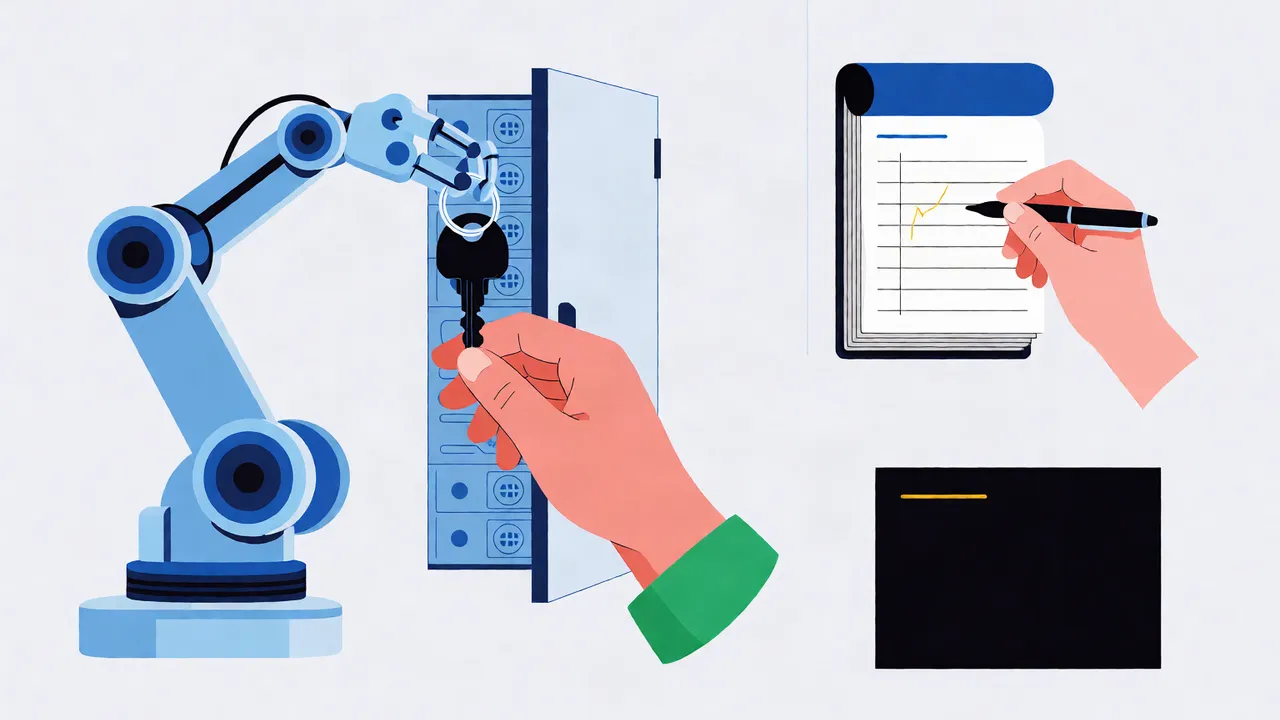
You do not secure AI agent credentials by hiding them better. You secure them by treating every credential as a non-human identity with a scoped lifetime, an auditable action, and a human authorization gate. Akeyless was recognized in the 2026 Gartner Magic Quadrant for PAM, and 1Password now sells "1Password for Agents" with the line "Give AI Agents access, not your passwords," which shows the industry has moved past treating agent credentials as ordinary passwords.
Key takeaways
- Treat each AI agent as a distinct non-human identity, never a shared service account.
- Issue short-lived credentials and require runtime approval before sensitive actions.
- Never hardcode API keys; inject them through a secrets store at runtime.
- Log every credential use so you can attribute actions to a specific agent run.
Why is AI agent credential security different from human credential security?
AI agents are non-human identities that act autonomously, so they cannot complete multi-factor authentication and they do not hesitate before calling a destructive endpoint. Human credential models assume a person is present; agent models must assume the code is running on its own. The OWASP Top 10 for Agentic Applications flags credential theft and excessive agent privileges as core risks, and 1Password frames the problem as giving agents access rather than passwords 1Password credential management for AI agents.
In a browser environment, the difference is sharper. A headless agent with a stored session cookie can act as a logged-in user without a human in the loop, which is powerful and dangerous. I cover how to bound that behavior in Implementing Robust AI Agent Security: A Developer's Guide to Identity, Sandboxing, and Audit Trails.
How do I implement least privilege for AI agents?
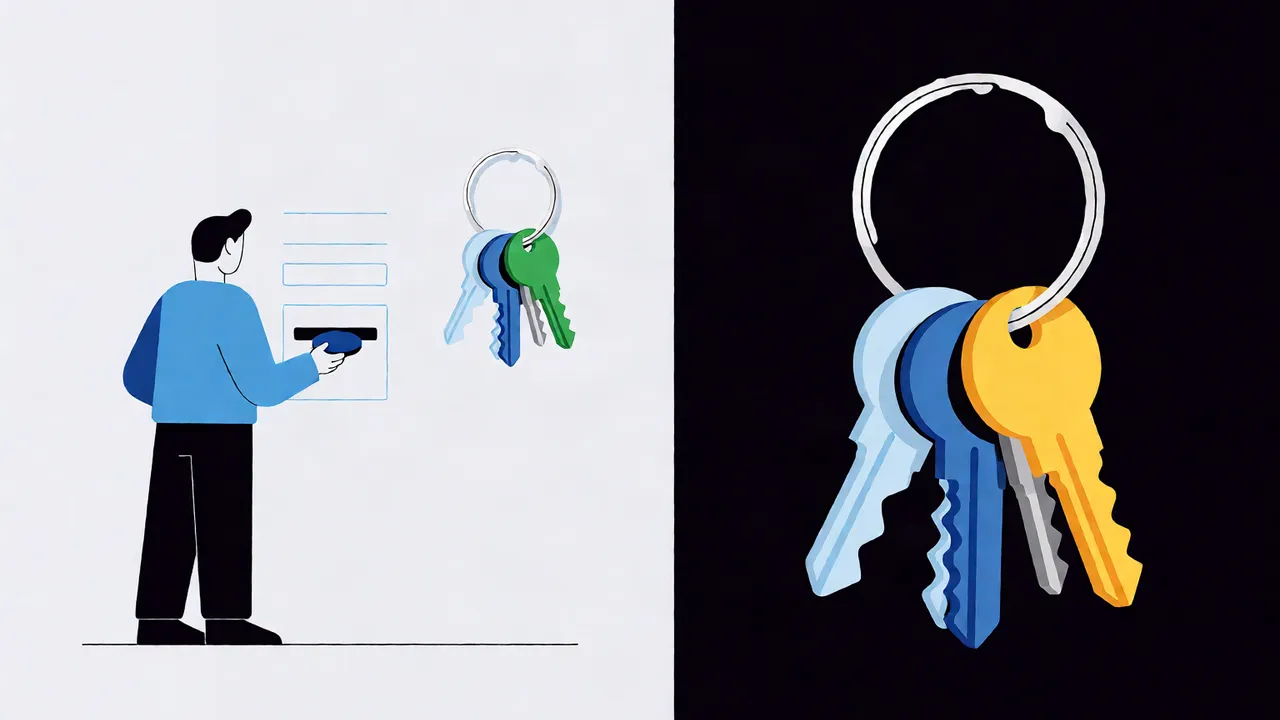
Give each agent the minimum credential set required for its current skill, and nothing more. If an agent only needs to read a CRM record, issue a read-only token for that resource, not a full OAuth token with write access to the entire organization. Scope by resource, action, and time.
I implement this by mapping each agent skill to a credential profile. A "browser:read" skill gets a session cookie with no form-submit capability; a "browser:write" skill gets a narrowly scoped token that expires after the task. The agent framework should reject any call outside that profile before it reaches the network. This is where governance meets credentials: you define what an agent may touch, and the runtime enforces it Implementing AI Agent Governance: A Practical Framework for Developers.
What does runtime access control look like for AI agents?
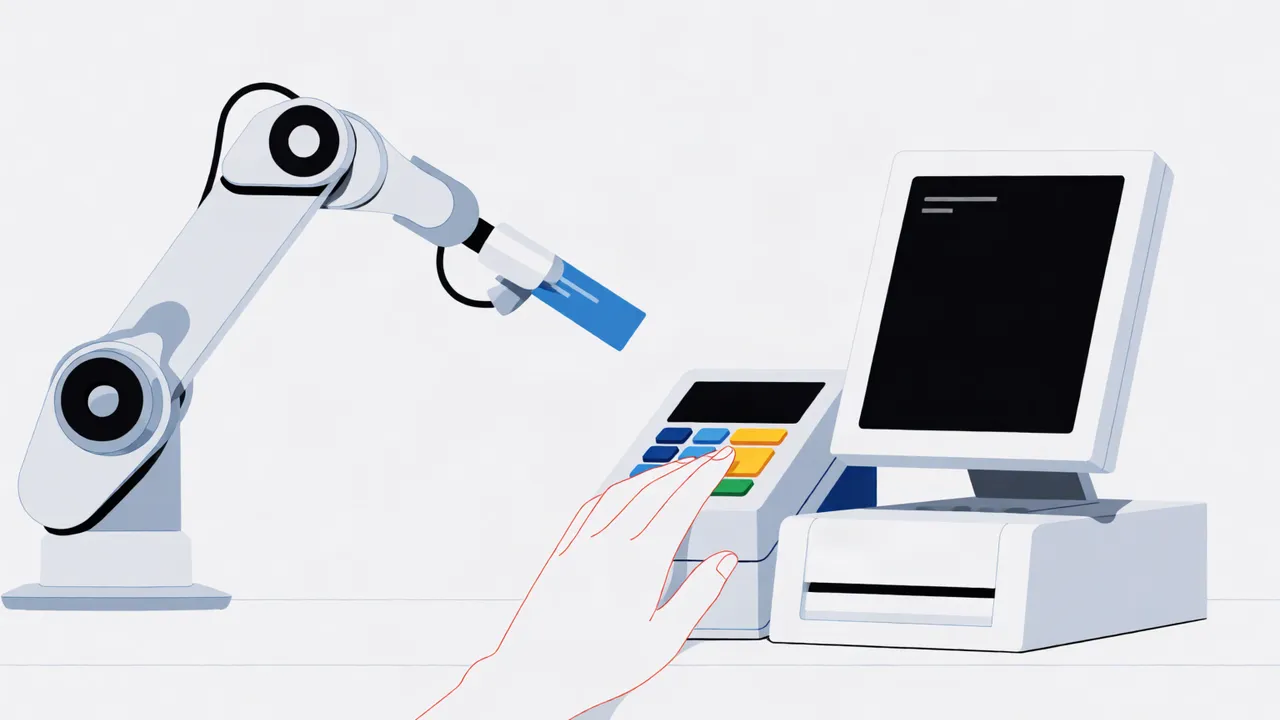
Runtime access control means granting access only when the agent needs it, and revoking it when the task ends. Instead of a long-lived API key baked into the agent image, you issue a short-lived token at the start of a run and require explicit approval for high-risk actions such as purchases or data exports.
Human-in-the-loop control belongs here. When an agent attempts a write operation outside its approved skill, the runtime should pause and request user authorization before proceeding. This is not optional for production agents that touch money or personal data. I describe the control-plane mechanics in Architecting an AI Agent Control Plane: A Developer's Guide to Runtime Governance.
How do I manage AI agent secrets without hardcoding API keys?
Hardcoding API keys in agent code or committing them to version control is the most common leak I see. Environment variables are only slightly better: they are still static secrets that live on disk and rotate manually. You need a secrets store that issues short-lived credentials at runtime and rotates them without touching the agent code.
Akeyless describes this as moving beyond static secrets to secretless security, and its platform was recognized in the 2026 Gartner Magic Quadrant for PAM Akeyless how to secure credentials in AI agents. In practice, the agent authenticates to the secrets service with a workload identity, receives a time-bound token for the target API, and discards it when the run ends. 1Password's agent approach matches this: give the agent access, not the password 1Password credential management for AI agents.
How do I handle AI agent identity management and attribution?
Every agent needs a unique, auditable identity. If five agents share one service-account token, you cannot tell which one made a change, and revoking one means revoking all. Assign each agent its own client identity, log every credential checkout, and attach the agent ID to every outgoing request so your audit trail points to a specific run, not a generic "bot" user.
This pairs with observability. If you are already tracing agent steps, add credential usage to the same trace so a security review can see which token was used for which DOM interaction Comparing AI Agent Observability Tools: A Developer's Guide to Production Readiness.
How do I integrate agent credentials with Vault, IAM, and PAM?
Do not build a parallel security stack for agents. Plug agent identities into your existing vault, IAM, and PAM systems so the same policies that govern human service accounts govern your agents. A PAM platform that recognizes machine and AI-agent identities—such as the one Akeyless was recognized for in the 2026 Gartner Magic Quadrant for PAM Akeyless how to secure credentials in AI agents—lets you apply session recording, approval workflows, and automatic revocation to non-human actors.
The trade-off is latency. A round-trip to a vault for every API call adds milliseconds that matter in tight browser loops. Cache short-lived tokens in memory for the duration of a run, but never write them to disk, and rotate them before they expire.
What credential mistakes should I avoid with AI agents?
I have seen teams make the same mistakes repeatedly:
- One key for every agent. Shared credentials destroy attribution and make rotation impossible.
- Long-lived tokens in container images. If the image is leaked, every key inside it is compromised.
- No human approval for writes. An agent that can POST to billing without a pause is a single prompt-injection away from fraud.
- Logging secrets. Debug logs that echo authorization headers turn your observability pipeline into a credential dump.
- Skipping rotation. Static secrets that never change are the easiest target for an attacker who gains read access to your environment.
Secure AI agent credential deployment checklist
| Control | What to verify |
|---|---|
| Unique identity | Each agent has its own client ID, not a shared service account |
| Least privilege | Credentials scoped to the specific resource and action the skill requires |
| Short-lived | Tokens expire at the end of the run or sooner |
| Runtime approval | Human authorization required for writes, payments, and data exports |
| No hardcoded secrets | Keys injected from a vault or secrets manager at runtime |
| Audit trail | Every credential checkout and use is logged with agent ID and timestamp |
| Rotation | Credentials rotate automatically; no static keys in images or env vars |
Before you deploy an agent to production, walk this checklist with your security team. If any row is empty, the agent is not ready.
If you are building browser-based agents and want infrastructure that treats credential boundaries as a first-class concern, take a look at how Twin Browser handles runtime control and deterministic replay for agent sessions.
FAQ
How do I manage AI agent credentials?
Treat each agent as a separate non-human identity, issue short-lived credentials from a secrets manager, and require runtime approval for sensitive actions. Never embed long-lived keys in agent code or container images.
What are AI agent authentication best practices?
Use unique workload identities per agent, scope tokens to the minimum required resource and action, rotate credentials automatically, and log every use with the agent ID attached. Require human authorization before the agent performs writes or payments.
How do I secure API keys for AI agents?
Do not hardcode them. Store them in a vault or secrets manager, retrieve them at runtime using the agent's workload identity, and exchange them for short-lived access tokens where possible.
What is runtime access control for AI agents?
It is the practice of granting an agent access to a resource only during the specific run that needs it, with the ability to pause and request human approval before high-risk operations, then revoke access when the run ends.
How does this fit the OWASP Top 10 for Agentic Applications?
OWASP identifies excessive agent privileges and credential exposure as top risks. Least-privilege scoping, short-lived tokens, and auditable agent identities directly address those categories by limiting what an agent can do and making it possible to trace any misuse.
Topics
AI agent credential security · manage AI agent credentials · AI agent identity management · secure API keys for AI agents · runtime access control for AI agents · AI agent secrets management · least privilege for AI agents · AI agent authentication best practices