Real-time data for AI agents means your agent acts on the current state of the world, not a cached snapshot. Without a pipeline that captures changes as they happen, the agent replays old context and makes decisions on information that is already wrong. The fix is a deterministic pipeline: stream fresh state to the agent and replay without new LLM calls.
Key takeaways
- Stale context makes agents act on outdated DOM state, prices, or inventory.
- Change data capture (CDC) and event streaming push updates instead of polling.
- Deterministic replay re-runs a browser skill with identical inputs and zero additional LLM calls.
- Measure event-to-decision lag, not just throughput, to know if your pipeline is fast enough.
Why Does Stale Data Break AI Agent Decisions?
An AI agent is only as good as the context it receives. If that context is a five-minute-old snapshot of a checkout page, the agent might click "place order" on an item that is already out of stock, or fill a form with a price that has changed. The agent does not know the data is old; it treats the snapshot as ground truth.
This is the core failure mode of batch-fed agents. They ingest data on a schedule, so the world moves between batches. By the time the LLM reasons over the context, the decision is already stale. Qlik frames this as a trust problem: AI needs to know what your data means and whether to trust it, which starts with knowing how old it is Qlik's framing of AI trust and data traceability.
Real-time fixes this by making freshness a property of the pipeline, not an afterthought. When the agent receives an event the instant a database row changes, its decision reflects reality.
What Are the Core Components of a Real-Time Data Pipeline for AI Agents?
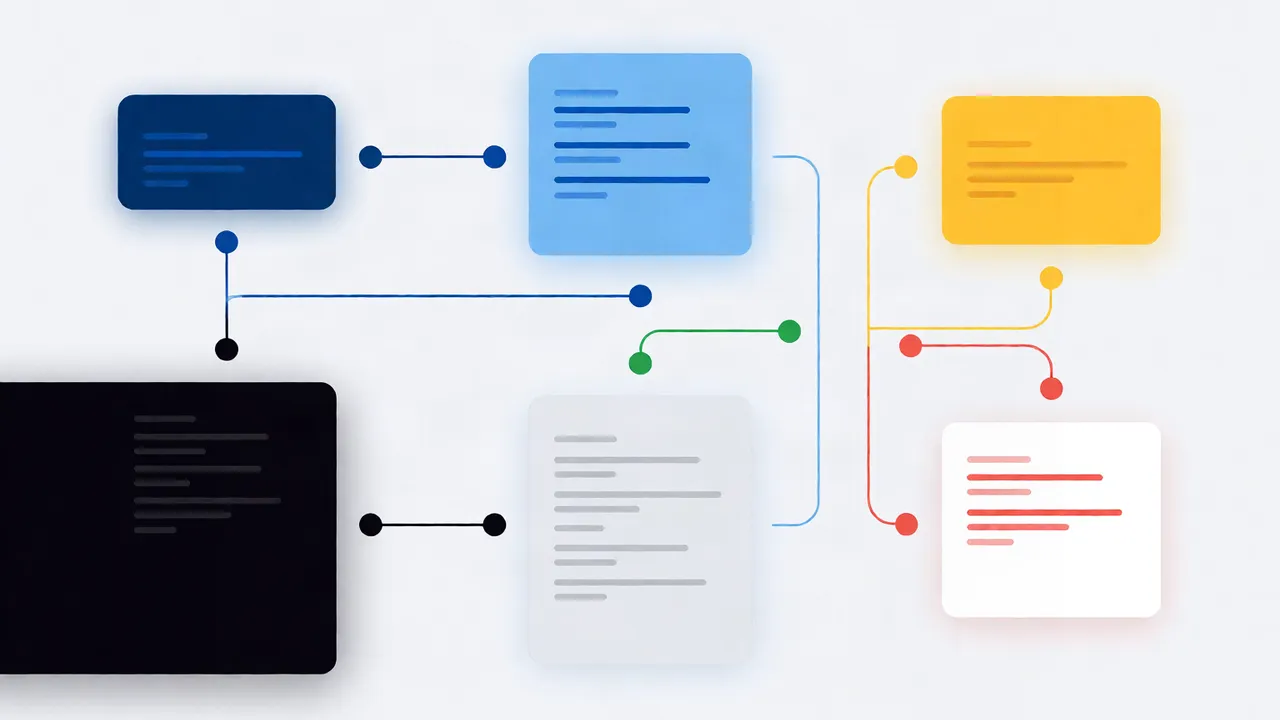
A real-time pipeline for AI agents has five parts: source connectors, change data capture, a stream processor, the agent runtime, and a replay log. Together they turn database changes into agent actions without waiting for a batch job. Each piece has a specific job, and skipping one breaks determinism.
| Component | Role | Example |
|---|---|---|
| Source connector | Ingests raw events | Database log, webhook, browser telemetry |
| CDC | Captures changes without polling | Transaction log reader |
| Stream processor | Filters and routes events | Stream processing, enrichment |
| Agent runtime | Runs the skill on fresh data | Browser agent, skill executor |
| Replay log | Stores deterministic inputs | Append-only event log |
Streamkap lists CDC, stream processing, and monitoring as core capabilities for real-time data platforms Streamkap's real-time data platform capabilities. You do not need all five on day one, but you do need CDC and a replay log if you want deterministic behavior.
How Do CDC, Streaming, and Event-Driven Patterns Keep Data Fresh?
CDC reads the database transaction log and emits each change as an event. The agent never polls; it subscribes. This is the difference between asking "what changed?" every minute and being told the instant a row updates.
Streaming takes those events and processes them in motion. You can filter out noise—ignore a price change of $0.01—and route the signal to the agent skill that needs it. Event-driven architecture means the agent wakes up on an event, not on a cron job.
The trade-off is complexity. CDC requires database privileges and log retention. Streaming adds operational overhead. For a single agent checking one dashboard, polling may be enough. For agents acting on inventory, pricing, or user sessions, CDC plus streaming is the right default.
How Do You Integrate Real-Time Data with AI Agent Frameworks and Tooling?
Your agent framework should accept a stream of context updates, not a static prompt. The skill receives a structured event—such as a new cart total—and injects it into the browser session before the LLM reasons. This keeps the model out of the hot path for routine lookups.
Using MCP (Model Context Protocol), you can expose a real-time data source as a tool the agent calls. The agent asks for the current price, the MCP server returns the streamed value, and the agent acts.
Browser skills are the unit of execution here. A skill compiles once: the sequence of clicks, fills, and waits is fixed. When fresh data arrives, you replay the skill with new parameters. The browser environment matters; a real logged-in browser handles cookies and sessions that headless mode misses, but headless is faster and cheaper for read-only checks Optimizing AI Agent Performance: A Deep Dive into Browser Environment Factors.
How Do You Measure Freshness and Decision Latency?
You cannot improve what you do not measure. Track event-to-decision latency, staleness age, replay hit rate, and LLM calls per run. These numbers tell you whether the pipeline is fast enough and whether replay is actually saving tokens.
Observability tools help here. If your agent takes ten seconds to react to a price change, that is a pipeline problem, not an LLM problem Comparing AI Agent Observability Tools: A Developer's Guide to Production Readiness.
Set an SLO: for example, event-to-decision under two seconds for pricing agents. If you exceed it, look at the stream processor and the browser startup time, not the model.
What Security and Governance Does a Real-Time Pipeline Need?
Real-time data often includes personal or financial information. The pipeline must enforce user authorization before an agent acts on a stream. A human-in-the-loop guardrail should approve high-stakes actions, and least privilege applies to the CDC connector as much as to the agent.
Never log raw credentials in the stream. Mask or tokenize PII at the edge, before it reaches the agent runtime. Audit trails must capture which event triggered which action Implementing AI Agent Governance: A Practical Framework for Developers.
How Does Real-Time Data Reduce LLM Calls and Improve Determinism?
If your agent re-reasons over the same page every time a number changes, you pay for redundant LLM calls. With a compiled skill and a replay log, you can replay the browser interaction with updated parameters and skip the LLM entirely for unchanged paths. Zero LLM calls on replay is the mechanism.
Compile the skill once, capture the DOM and network state, and when the underlying data changes, substitute the new values and replay. The result is deterministic: same inputs, same outputs. I cover the replay mechanics here Implementing Deterministic Replay for AI Browser Agents: A Practical Guide.
How Do You Build This Infrastructure: A Step-by-Step Approach
- Pick one high-frequency decision: price check, inventory lookup, or form submission.
- Add CDC to the source database so changes emit events.
- Route events through a stream processor to the agent skill.
- Compile the browser skill once and store the replay log.
- Set a freshness SLO and alert on staleness age.
- Add a human-in-the-loop gate for writes or high-value actions.
- Measure event-to-decision latency and tune the stream processor.
Start small. One skill, one stream, one SLO. Expand only after the replay is deterministic.
Real-time data is infrastructure, not a feature. If you are building browser agents that act on live websites, the pipeline is what separates a useful agent from one that makes expensive mistakes. Learn more at Twin Browser.
FAQ
What is AI agent data freshness?
It is the age of the context an agent uses when making a decision. Fresh data means the agent sees the current state; stale data means it acts on an old snapshot.
What is streaming data for AI agents?
It is a continuous flow of events—database changes, API updates, browser actions—delivered to the agent as they happen instead of on a schedule.
What is CDC for AI agents?
Change data capture reads database logs and emits row-level changes as events, so agents react to updates without polling.
What is event-driven AI agent architecture?
An architecture where agents trigger skills in response to events rather than cron jobs, reducing latency and unnecessary LLM calls.
What is low-latency data for AI?
Data that reaches the agent quickly enough that the decision remains valid. Latency is measured from source change to agent action.
Topics
real-time data for AI agents · AI agent data freshness · streaming data for AI agents · CDC for AI agents · event-driven AI agent architecture · low-latency data for AI · real-time AI agent decisions · AI agent data ingestion